
*Highlighting New Options for Elderly with Severe Aortic Stenosis
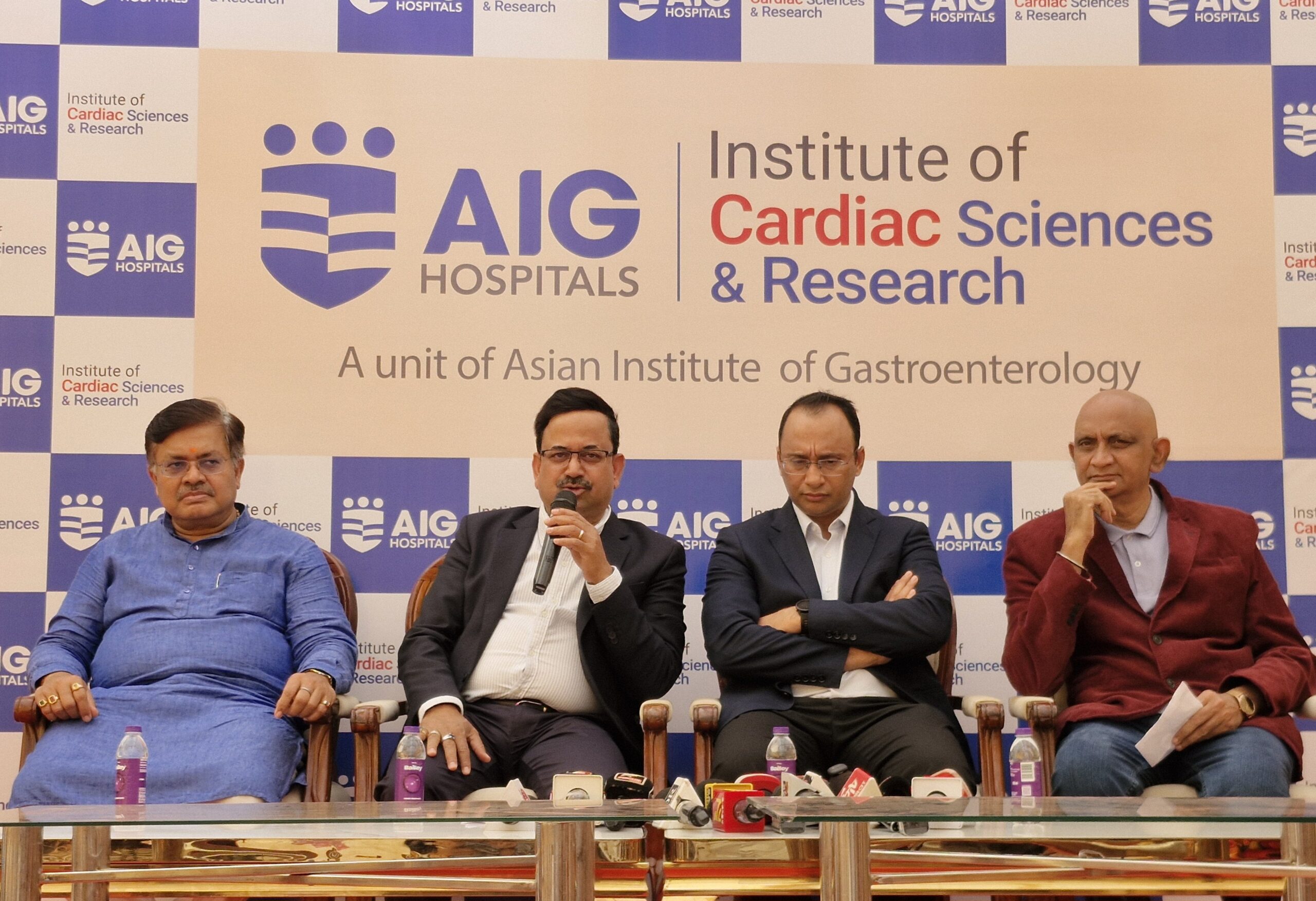
Bhubaneshwar, 8th March 2026 [ADN] AIG Hospitals today highlighted the growing role of minimally invasive cardiac therapies after successfully performing a Transcatheter Aortic Valve Replacement (TAVR) procedure on a 91-year-old former Governor of Andhra Pradesh, demonstrating how advanced structural heart interventions can significantly improve outcomes even in very elderly patients.
The patient was diagnosed with severe aortic stenosis, a life-threatening condition in which the main valve of the heart becomes severely narrowed, restricting blood flow from the heart to the rest of the body. Severe aortic stenosis can lead to symptoms such as breathlessness, chest discomfort, fatigue, dizziness, and in advanced stages, heart failure and sudden cardiac death if untreated.
Given the patient’s advanced age and multiple medical conditions, conventional open-heart surgery carried significant risk. After careful evaluation and detailed discussions with the patient and family, the medical team recommended TAVR, a minimally invasive catheter-based procedure that replaces the diseased valve without opening the chest.
The procedure was performed successfully by Dr. Anuj Kapadiya, Director of Cath Lab & Senior Interventional Cardiologist at AIG Hospitals, along with the hospital’s multidisciplinary Heart Team.
Unlike traditional valve replacement surgery, TAVR is performed through a small needle-based access, usually through an artery in the leg, allowing the new valve to be positioned within the diseased valve through a catheter. The approach significantly reduces recovery time and procedural stress, particularly in elderly or high-risk patients.
The patient recovered remarkably well following the procedure and was discharged within three days. Nearly a month after the intervention, he continues to do well and has resumed routine activities.
Speaking on the occasion, Dr. Anuj Kapadiya said that severe aortic stenosis is increasingly being diagnosed in elderly patients, many of whom earlier had limited treatment options due to the risks associated with open-heart surgery.
“Modern structural heart interventions like TAVR have transformed how we treat such conditions. With minimally invasive techniques, we are now able to offer life-saving therapy even to patients in their late eighties and nineties, with excellent recovery and improved quality of life,” he said.
Dr. D. Nageshwar Reddy, Chairman of AIG Hospitals, emphasized the importance of awareness and early diagnosis of heart valve disease, particularly among elderly individuals.
“Many people assume symptoms such as breathlessness or fatigue are simply part of aging. In reality, they may be signs of serious but treatable valve disease. Advances like TAVR are redefining treatment possibilities, allowing elderly patients to receive effective therapy without the risks of major surgery,” he said.
He also highlighted that complex procedures such as TAVR require a coordinated Heart Team approach, involving interventional cardiologists, cardiac surgeons, imaging specialists, anesthetists, and critical care experts working together to determine the safest and most appropriate treatment for each patient.
Doctors at AIG Hospitals noted that cases like this underscore how modern cardiology is shifting toward less invasive, patient-centered therapies that prioritize faster recovery, improved safety, and better quality of life.
The hospital also acknowledged the patient’s strong determination and commitment to recovery, noting that his positive outlook and adherence to medical advice played a significant role in his smooth post-procedural recovery.
Experts say that as India’s population ages, awareness about structural heart diseases such as aortic stenosis will become increasingly important, and minimally invasive procedures like TAVR will play a critical role in addressing this growing healthcare challenge.
About the Author