

Bhubaneswar, 17th Jan 2026:(ADN) The Fishing Cat Project and Human and Environment Alliance League (HEAL) with support from The Habitats Trust and Bhubaneswar Round Table 53 have launched a first-of-its kind initiative in Odisha.

The project is on making crafts out of water hyacinth (or Rajadal in Odiya) collected from Chilika lagoon. The crafts are now at display and up for sale in an eco-souvenir shop at Tangi town, enroute to Mangalajodi.
Water hyacinth is known to clog wetlands and waterways like cholesterol clogs our arteries choking fish pathways, reducing fishing catches and raising the price of fish in the market.
This is the same problem plaguing the largest freshwater lake in the world, Lake Victoria. There, women are being trained to collect the hyacinth and create crafts, furnitures, paper and even bio-fuel out of it. This leads to repeated manual removal of the hyacinth and the incentive comes from money earned out of selling the items. Close to 25 women groups are now earning money from this profession in Kenya.
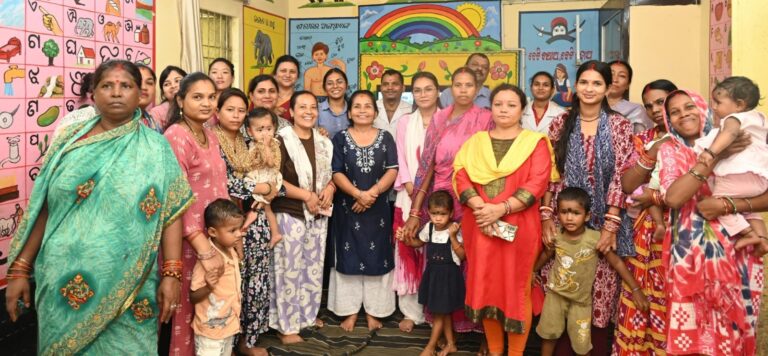
“This inspired our initiative in Chilika,” says Tiasa Adhya, co-founder of The Fishing Cat Project. “We invited trainers from Assam and Bengal to teach a group of 12 fisherwomen in Chilika from Hatabaradi village, Khordha district,” says Arya Swain, Project Officer, HEAL.
“A good thing is that Chilika has local tourist spots and year-round local village fairs. Therefore the women can sell their products locally without depending on any external agency,” says Iptishamun Nesha, a Ravi Sankaran-Inlaks fellow who is also mentoring the woman’s group.
“Over the past year, I have noticed the dedication and finesse with which the women of Hatabaradi make the water hyacinth products. We are proud to support the initiative,” says Sanjog Sahu, Chaiman of Bhubaneswar Round Table 53 and a native of Hatabaradi.
As of now, 12 women have received basic and advanced training on the subject. They have also recently been invited by government organisations to provide training to other groups under their block. “We have given stalls in local fairs, sold to tourists flocking to Chilika during the winter season and have been approached by various enterprises who want to order products from us,” says Urmila Behera, leader of the Hatabaradi women’s group.
About the Author