
Parthasarathi Jena
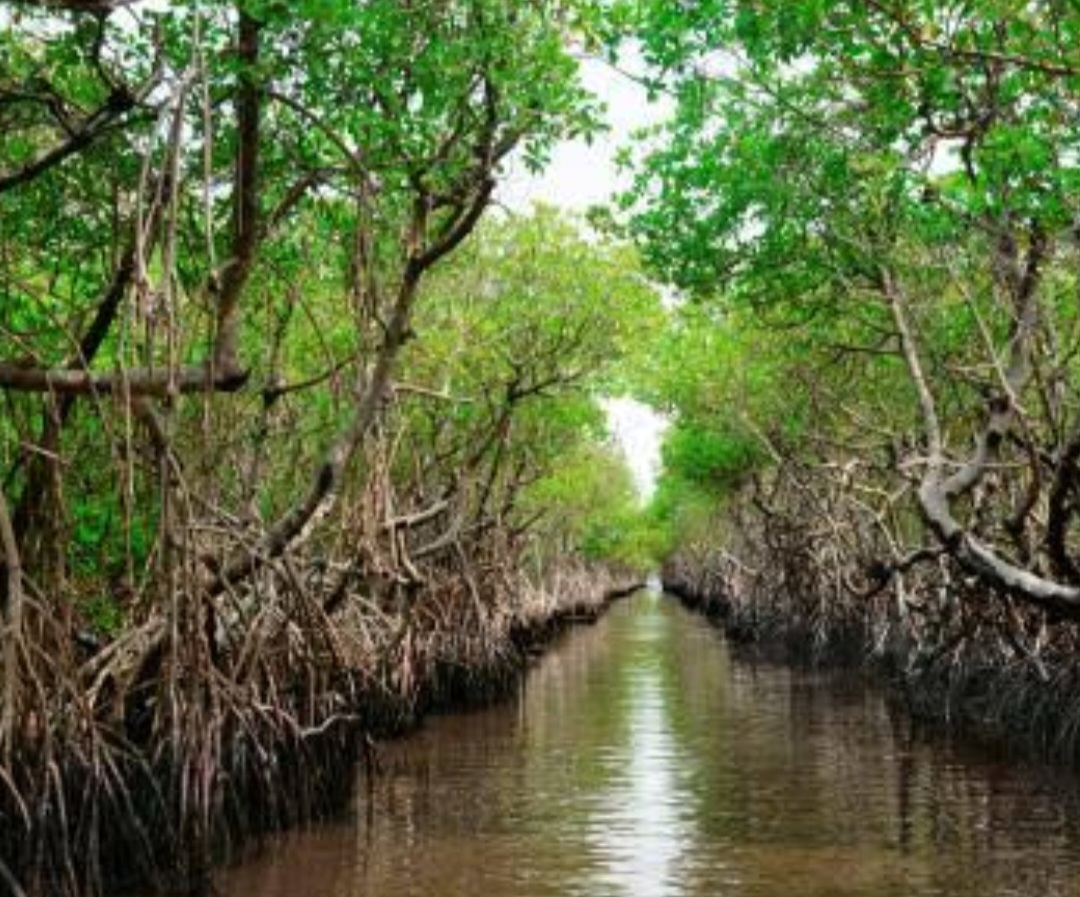
“World Mangrove Day” is observed every year on 26 July. It is also known as Mangrove Day. Mangroves is a type of tropical rainforest plant that grows in moist soil , moist soil, brackish water along the coast and is occasionally submerged by the tide. They can tolerate high salinity, tidal flooding and relatively low oxygen conditions.
There are over 100 species of mangrove plants found worldwide, with India having about 60 species. Since 1980, we have lost half of our mangroves. Some countries have lost more than 80 percent of them.
The roots of these plants are strong and firmly anchored in the ground, which allows them to withstand even the strongest tidal waves. It provides a rich habitat for many aquatic organisms such as fish, crabs, and shrimp.
Conservation of salt marsh ecosystems is important because it prevents coastal erosion, reduces the impact of tides and tsunamis, and absorbs greenhouse gases.
World Salt Marsh Day, celebrated on July 26, was decided by the 2015 General Conference of UNESCO. The aim is to raise awareness about the protection and conservation of this important ecosystem.
Salt marshes are important for the balance of ecosystems. These plants act as a safe haven for many organisms, helping to protect them from predators and protecting them from extreme heat and strong tides. In addition to enriching local biodiversity, coastal salt forests absorb five times more carbon dioxide from the atmosphere than inland forests.
Overall, coastal salt forests are disappearing three to five times faster than the global average rate of forest loss.
In the past 40 years, the area covered by salt forests has almost halved. Therefore, it is essential to focus on protecting and conserving coastal salt forest ecosystems.
The sustainability of salt forest ecosystems is threatened by a number of issues, including climate change, decreasing salinity in water, tidal changes, and soil pollution and erosion.
The main threat to these forests is shrimp farming. Some salt forests are cut down to create artificial ponds that are used for shrimp breeding. Antibiotics and chemicals are used extensively to prevent shrimp diseases and increase yields. Due to the extensiveness of such shrimp farming, the ecological balance of the salt forest has been irreparably destroyed in a few years.
Salt forest plants can be used for various purposes due to their strength, so their price is high in the market. The wood is also used for firewood and charcoal production. Due to this, these forests are being destroyed at a rapid pace. The flow of rivers is changed to supply water to roads, buildings, or farms, which affects the estuaries where they meet the sea. This is also a major cause of salt forest ecosystem disturbance.
Salt forests provide a unique habitat for a variety of plant and animal species, acting as breeding, nursery and food sources for many marine and inland organisms.
The salt forest ecosystem is also important for combating extreme weather events like cyclones.
Located in Kendrapara district, the salt forest covers the coastal area between Dhamra estuary and Barunai and is designated as the Bhitarkanika Sanctuary (672 sq km). A part of this area (145 sq km) is also designated as a national park. This area of salt forest is relatively well preserved. Bhitarkanika Sanctuary is the second largest biodiversity ecosystem in India. The 480 km long coastline of Odisha was covered with salt forests in ancient times, but now it is confined to the Bhitarkanika region.
When Odisha was hit by a severe cyclone in Kendrapara district in 1999, the Bhitarkanika coast was the least affected as the salt forests were located there.
The ‘MISHTI’ (Mangrove Initiative for Shoreline Habitats & Tangible Incomes) scheme is a Government of India initiative launched by the Ministry of Environment, Forest and Climate Change in 2023. It aims to restore and expand mangrove cover in coastal areas and saltpan lands and strengthen local livelihoods.
The official theme of ‘World Mangrove Day’ (International Day for the Conservation of Saltpan Ecosystems) for 2026 is “Healthy Mangroves for Sustainable Blue Economy and Climate Resilience”; along with other regional events, it will also focus on “Raising awareness on the importance of mangrove ecosystems for the conservation, management and sustainable use” in line with the United Nations’ goal.
“Hental forests can provide a variety of ecosystem goods and services that contribute to the well-being, food security, and safety of coastal communities.” – CareEarth
About the Author